As we look back on this season of St. Phoebe Fall, one word stands out: hope. Throughout the season, we have felt an overwhelming sense of energy and excitement for what the Holy Spirit is doing among us.
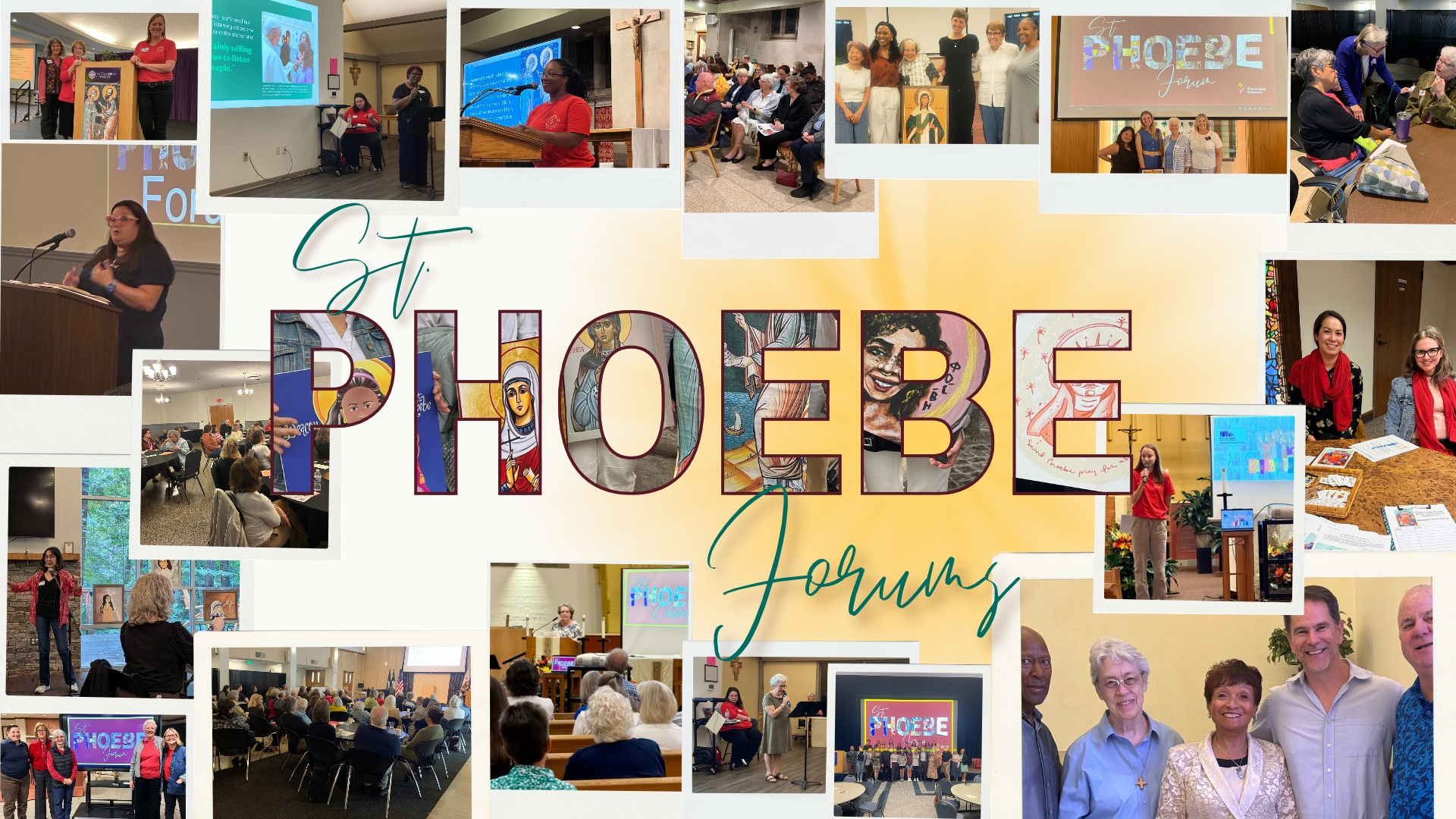
The beating heart of St. Phoebe Fall is the St. Phoebe Forum. Inspired by St. Phoebe’s witness, these forums are locally organized educational events that invite all of us to learn about Paragraph 60 and the state of the conversation on women’s ministry and leadership in the Church. Over the course of St. Phoebe Fall, there have been approximately 75 St. Phoebe Forums in 33 dioceses in the U.S., Canada, Brazil, Bolivia and Australia. Each forum concludes with an invitation for attendees to contribute to the Vatican’s Synod Implementation Phase by participating in an online St. Phoebe Listening Session. (The last of which is this Saturday, November 14th – register here!)
As we pored over the treasure trove of feedback forms from both St. Phoebe Forum attendees and hosts, we’ve been met with a few constant refrains:
“I have been waiting.”
“What comes from the Holy Spirit cannot be stopped.”
“I am filled with hope.”
In my role as Program Associate at Discerning Deacons, I am often the first point of contact for people who are new to our mission. The influx of new contacts entering through the “front door” of Discerning Deacons directly from St. Phoebe Forums is striking. Across the board, newcomers are compelled both by the hope of the leaders presenting St. Phoebe Forums, but also by our preparation and theological grounding. While the volume of engagement is at a new high, the nature of this kind of feedback is not new, and neither is my awe and appreciation for it. As the person who is the first touchpoint, I believe that this palpable momentum speaks to the presence of the Holy Spirit in this work.
Another source of hope for some Phoebe Forum attendees that is worthy of mention: Synod Study Group 9. Study Group 9 was originally tasked with taking up the Church’s approach to “controversial doctrinal, pastoral, and ethical issues.” In their final report, they reframed “controversial issues” as “emerging issues.” The report goes on to say that “issues that we today regard as ‘controversial’ can represent, in a positive light, the emergence of experiences that urge the Church to grasp and express at an unprecedented and deeper level, its own appropriation and articulation in the present moment of history, and within the diversity of contexts and situations, of the timeless message of the Gospel intended for all.” In other words, what looks like controversy might instead be the Spirit pressing the Church toward something it hasn’t yet fully worked out.
Multiple attendees cited this shift from “controversial” to “emerging” as a noteworthy takeaway from the St. Phoebe Forum. This raises a crucial question for the conversation about women’s ministerial gifts and leadership, and for the open discernment about women and the diaconate. What if the sense of scandal or caution around conversations about women’s gifts for ministry were seen not as controversy, but as a sign of emergence, of where the Holy Spirit might be leading the Church?
With this posture, listening replaces defending, real conversation replaces assumption, and discernment replaces disagreement.
Of the approximately 1,400 people who have attended St. Phoebe Forums throughout this fall, over 600 submitted follow-up surveys. Thirty percent of these included the word “hope.” And as much as there is plenty of evidence of hope for a particular outcome — for example, that women be ordained deacons — there’s evidence of something deeper going on, too: an emerging hope in the process itself. This hope is bound up in a sense of how the Church might be starting to approach questions about women’s vocations differently: with more parrhesia, more humility, and more listening. In other words, it’s a hope for synodality, born of an experience of synodality.
As we near the end of St. Phoebe Fall, I invite you to join me in holding onto this word: hope. If these St. Phoebe Forums have taught us anything, it’s that the people of God are ready to listen, and are ready for a new way of having this conversation about women’s experiences and gifts for ministry.