“We cannot simply delegate this task to institutes or associations endowed with a particular charism. Before the concrete faces that confront us in daily life, the entire Christian community is called to regard these children as its own sons and daughters, and to engage with the concrete story of each one of them.”
– Pope Leo, Message for the World Day of Migrants and Refugees, September 27, 2026.
I am writing to you on my final day of work before going out on maternity leave. I’m currently 38 weeks and 6 days pregnant – praying for a healthy and safe birth. Eager to welcome a new life into our home. And humbled to get to be a mother of four.
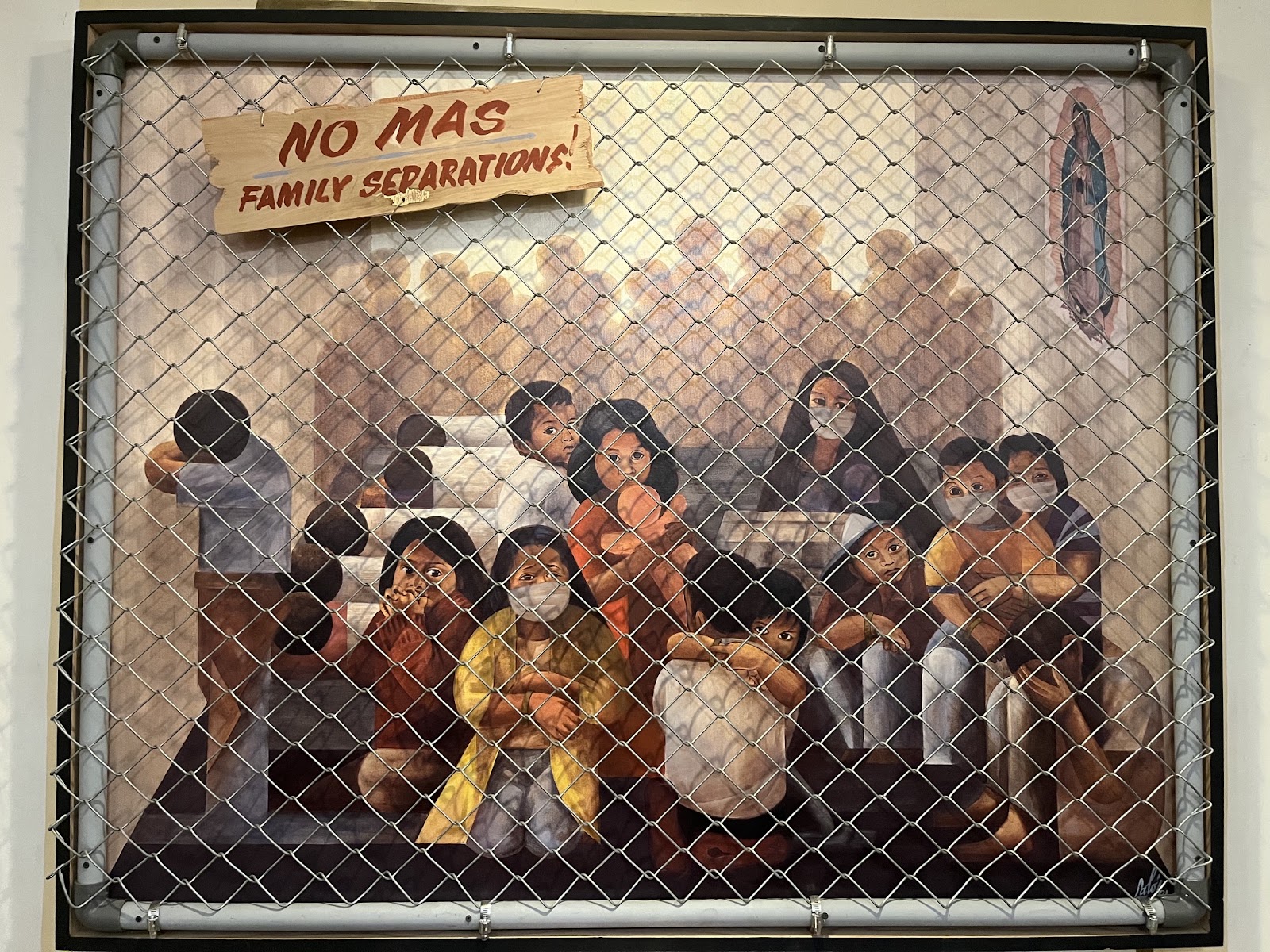
As a person with a diaconal vocation and heart, growing a human being in 2026 while not looking away from the persistent coverage facing women and children being detained at Dilley detention center in Texas — it did some work on me.
I don’t personally know families being held there today. I haven’t been to the facility. But I have been inside prisons. And whenever I pray: At home. On a walk . When I can’t sleep at night. In church. Doing the dishes. Chasing my toddler. Feeling the baby punch my ribs — the stories, faces, cries and letters from children in Dilley are what fill my heart and spirit and mind.
As I tenderly snuggle my almost 3-year-old at bedtime, I think of the conditions we are placing three year olds in. When I prepare my 14 and 12-year-olds for the start of the school year, I think of those who start the year without a mother or a father, or who are themselves wasting away in an internment camp.
When a government sets its course on deporting and detaining a million people, the toll of human suffering is incalculable. When a bread-winner is taken out of a family, a chasm remains.
Dilley has personalized this toll for me.
And it raises a persistent question: why can this be? How can we know it is happening and it endures? Why is the facility not yet shut down?
That is the driving question that hounds my prayers, calling me to do more than wonder and learn and read and reshare and sign the petition and call my member of Congress.
It’s a question that begs for more: an analysis of the decision-making apparatus which allows this to persist. What power structure currently maintains a national warehouse that keeps mothers and children together in conditions of confinement and horror. Who is deciding? Who has to staff it? What rights are ignored? What laws justify this? What laws are being violated? How does this not undermine our nation’s actual constitution, to say nothing of our moral constitution?
And out of such an analysis is there a path of collective action to walk on together? A campaign to persist until the facilities are closed. Until all such places are closed.
Could this be what it means to be brave at home in the land of the free? For a country who claims to love freedom, we seem to love taking it away, using our tax dollars to fund an apparatus of confinement and grow industries that require humans to labor to cage other humans. It’s not new to our history — but in our present it is escalating and expanding to the tune of $220 billion dollars.
I refuse to believe nothing can be done. I believe too much in the power of our baptism.
I wonder who else carries this refusal within them – and what we then might do together, to lend a hand, heart, venmo payment, to those who have been standing in this struggle closely, in a daily way, witnessing to us what is happening. How can we commit ourselves to help, as Catholics in America, as people of good will?
If you want to say no to detaining children, together as Discerning Deacons — I invite you to register your interest in this brief form.
I trust we will also find the Spirit illuminating the next set of choices we can say yes to, until the place is shuttered, families are together here contributing their talents in the place they call home, and our nation passes civil laws to ease a paperwork processing problem instead of waging a ruthless campaign of mass deportation.
I’m issuing this call as I’m days away from welcoming a child into the world. Which means I won’t actually be able to personally act or lead for a few months. But I trust in the groundswell of diaconal ministers sharing their deep desires, and am eager to discern if we are called to move in communion with one another in this shared work to attend to “even just one of these children.”
In the meantime, I know so many of you are not waiting! Such as Carley Hasselhorst and the diaconal women and men in Indiana who celebrated Mass this weekend at Miami Correctional Facility as part of a state-wide campaign to end the practice of ICE detention in the facility. Or the pastoral leaders working together with grassroots organizers in St. Louis, Missouri to honor the memory of Glendy, and to promote the dignity and safety of immigrant families throughout the archdiocese.
Let us together continue to grow in awareness which informs prayerful, strategic action. And let us continue to be courageous with our love, remembering that when we receive a little child, we are receiving Christ — who wants to make a home in our broken hearts.

This is the hub where we share relevant news, events and opportunities to participate in the work.
*We will send the newsletter only once each week, and we will never share or sell your information.