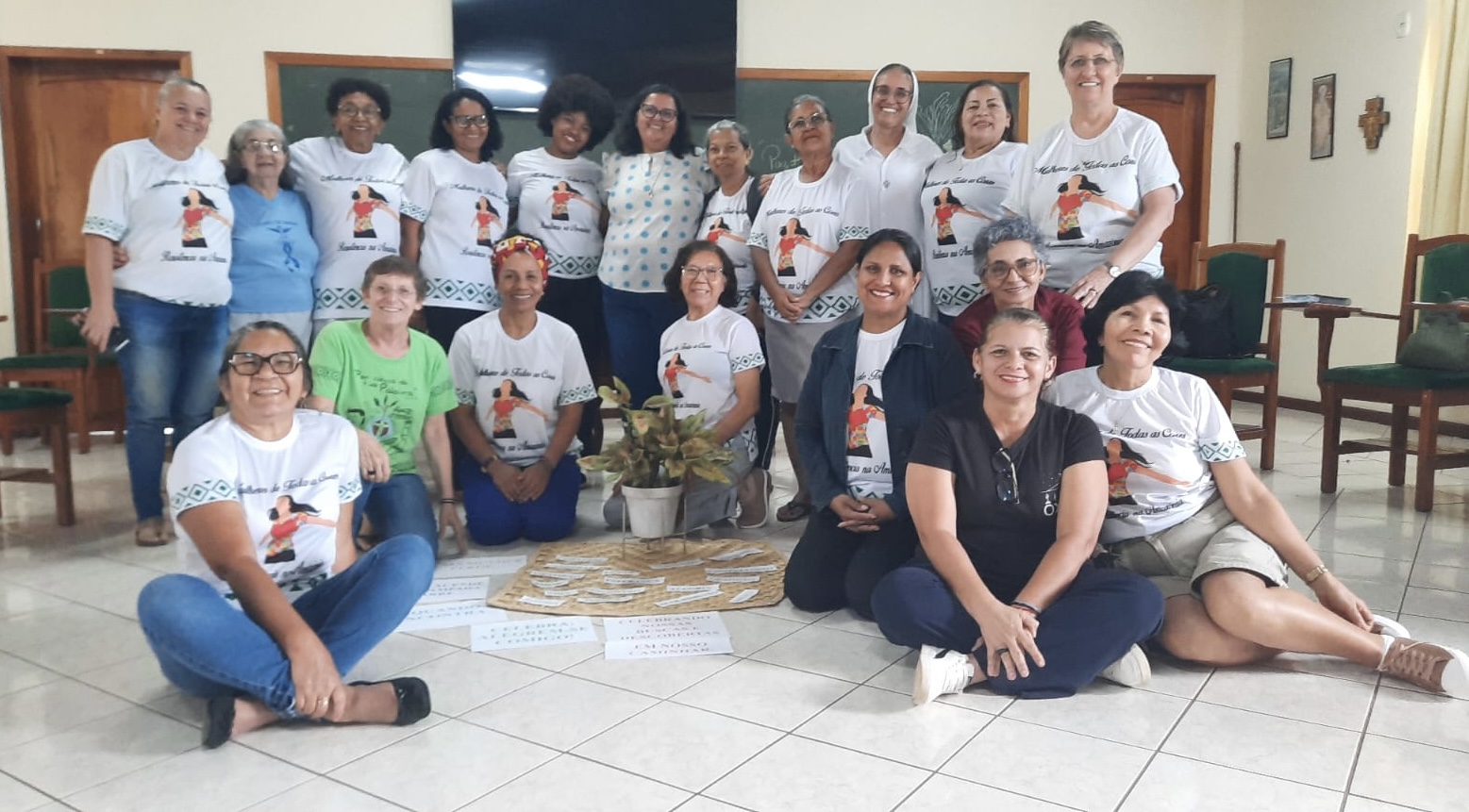
Women of All Colors is a group from the Amazon region of Brazil, committed to promoting a Church that is increasingly synodal, one in which women and men are equally able to live out their vocation and respond to God’s call. Through our meetings and shared reflections, we continue to deepen our understanding of the role of women in the church. Drawing on articles and studies by women writers and theologians who believe in women’s vocation to ministry in the Church, including the permanent diaconate, we reflect on what it means to be part of a synodal Church. In a Church characterized by communion and participation, there is no place for power dynamics or domination, but rather for service, care, and the sharing of gifts placed at the service of the Kingdom of God. We believe that the Church should recognize and value the ministries that women perform, because we understand that spiritual gifts are distributed by God without distinction of gender.
We recognize that, in many contexts, there is a fear of losing power, as well as resistance to accepting the processes of shared decision-making that are characteristic of a truly synodal Church. Unfortunately, we continue to live in a reality marked by clericalism, which fosters an understanding of the Church that is overly focused on ordained ministerial power.
For this reason, our meetings act as spaces where women can speak, express themselves, vent their feelings, share their experiences, find mutual support, and deepen their ecclesial awareness. These meetings and discussions teach us the importance of active listening, mutual support, and rebuilding self-esteem. Inspired by Pope Francis’ words “The Church is female,” our group aims to value every member, so that in the family, in the community and in all areas of society and the Church, women may be heard and respected as the image and likeness of God.
As we reflect on the future, we believe it is necessary to develop a genuine “theology of women,” strengthening the synodal process and encouraging the creation of committees and study groups on the female diaconate at the grassroots level. We must continue reflections, studies, and in-depth analyses on the mission of women in the Church. We must build a Church that is increasingly synodal, participatory, and co-responsible.
The examples of women disciples in the New Testament reveal that the mission of evangelization is a shared one, and that reflection on the women’s diaconate arises from the ecclesial and missionary experience that women have lived throughout history. We believe it is important to amplify our call for women to have an active voice in decision-making spaces and in the drafting of official Church documents, so that they are no longer viewed merely as subjects of clerical debate. We must also promote practical discussions in grassroots communities about the female diaconate, expanding dialogue, active listening and awareness of women’s participation in the mission of the Church. We also recognize the need to promote and create environments that protect women from all forms of violence both within and outside the Church. We must continue to care for our Common Home by fostering sustainable lifestyles, combating waste and inequality through small, everyday actions inspired by Pope Francis’s encyclical Laudato Si and the principles of integral ecology.
We can affirm with conviction that we, the Women of All Colors group, are aware of an ecclesial reality that is still marked by exclusionary structures. For this reason, our struggle for the recognition of the permanent diaconate for women joins the efforts of so many other groups and movements around the world that continue to reflect, engage in dialogue, and seek a more participatory and inclusive Church, faithful to the Gospel of Jesus Christ.
What have we achieved in terms of synodality and discernment with regard to women in ministry, including the diaconate?
We believe that the synodal Church is one in which all the people of God walk together and actively participate in the Church’s mission. Therefore, it is necessary to overcome the idea that the Church is composed solely of priests and bishops.
We believe that the Church should recognize and value the ministries that women perform, because we understand that spiritual gifts are distributed by God without distinction of gender.
What were the achievements and challenges?
As an achievement, we consider that the group has been respected within the Church, although there is still a significant number of priests who do not accept this position. We recognize that, in many contexts, there is a fear of losing power, as well as resistance to accepting the processes of shared decision-making that are characteristic of a truly synodal Church. Our meetings are spaces where women can speak, express themselves, vent their feelings, share their experiences, find mutual support, and deepen their ecclesial awareness.
Another major achievement has been our efforts to raise awareness about caring for our Common Home. Since the group’s inception, we have planted more than 3,000 trees in gardens, public spaces, and various church communities, making a tangible contribution to the preservation of life and the Amazon.
We recognize that, as a challenge, women are not yet fully called upon to participate in decision-making bodies within the Church. Unfortunately, we continue to live in a reality marked by clericalism, which fosters an understanding of the Church that is overly focused on ordained ministerial power.
Another major challenge is to overcome the patriarchal views that have historically shaped both society and the Church itself.
What have we learned?
We are disciples of Jesus, messengers of the resurrection, called by Him to be at the center of the mission, not on the sidelines.
What are the next steps?
We believe it is necessary to:
In conclusion:
Our group consists of about 30 women and is recognized and supported by our archbishop, Dom Roque Paloschi. Our formation sessions and gatherings are listed on the archdiocesan pastoral calendar.
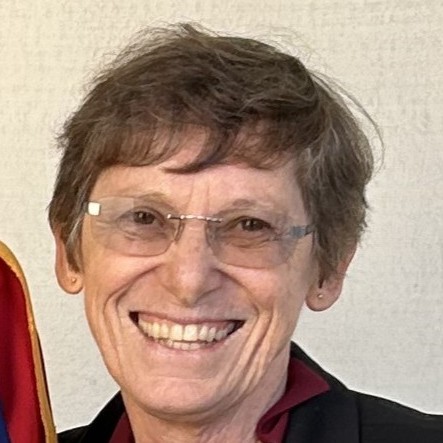
By Sr. Terezinha Dalcegio, CF
She leads the group “Mujeres de Todos los Colores (Women of All Colors) in the Amazon region of Porto Velho, Brazil.

This is the hub where we share relevant news, events and opportunities to participate in the work.
*We will send the newsletter only once each week, and we will never share or sell your information.