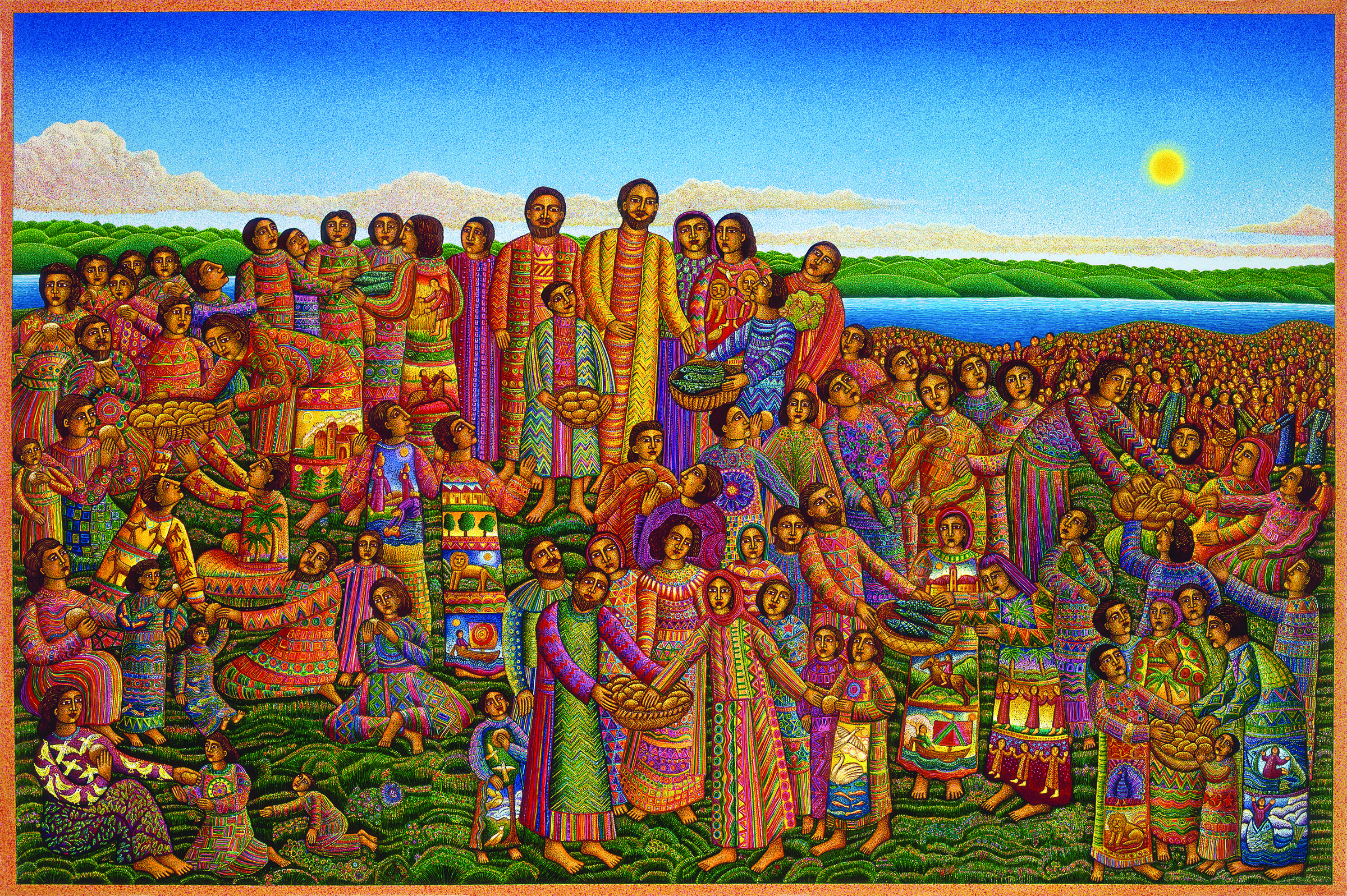
As the choir led us in the communion hymn on Sunday — “One bread, one body, one Lord of all…” — I felt both a deep solace and a tender challenge. Solace in the truth that we belong to one another in Christ. And challenge in how that mystery calls us to live — especially in moments of sorrow, fear, and uncertainty.
Our world right now is marked by grief. In Minneapolis and across Minnesota, communities are reeling from the recent death of a beloved neighbor, a mother, a human being whose life mattered dearly to those who knew and loved her. Tens of thousands have taken to the streets in peaceful mourning and protest, crying out for accountability, safety, and justice.
Grief is not a partisan tool. It is a profound human reality that connects us — precisely because it touches our shared vulnerability. In the face of loss, we are reminded that each person’s life reflects the sacred dignity bestowed by our Creator. Each life carries God’s image. When one suffers, we all suffer; when one mourns, we are called to weep alongside them.
This radical belonging is what the Eucharist summons us into: a life together grounded in healing rather than harm, in compassion rather than division. The peace we receive at the table — God’s peace — is not the absence of struggle; it is a presence that holds us even when the world shakes.
I have been imagining lately what it might look like if every parish had a team devoted to the ministry of listening and bridge-building — a group who share in the vocation to straighten the pathway from the altar to the streets. A team that meets parishioners where they are, listens for the real pressures in their lives, discerns the gifts God has placed among them, and stays attentive to what is happening in the wider civic community. A team that helps the parish know when neighbors are suffering, when policies threaten human dignity, and when opportunities arise to build the common good together.
This ministry of listening and bridgebuilding is profoundly diaconal. Not because only deacons are called to it, but because all of us, by baptism, are invited into Christ’s ministry of public service — especially where pain and injustice are felt most deeply.
Jesus’ public ministry begins in the shadow of John the Baptist’s arrest and execution. The Gospels remind us again and again that he walks into brokenness, not away from it. Followers of Jesus in every age face the same choice: how will we embody that presence of mercy and hope today?
The synod reminds us that a synodal Church — a Church that walks together — can be “a prophetic voice in today’s world,” inviting dialogue instead of discord, care instead of indifference.
Yet the hope of synodality requires something from each of us. Communion must be practiced. What if we truly act like we belong to one another? What if we respond to grief with presence, to fear with solidarity, and to division with humility and love?
We would discover that Eucharist becomes part of our cells and knits us into a Body whose mission is the healing of the world.
Now, at the beginning of this new year, Christ’s ministry calls us forward — not alone, but as one Body, sent into a world aching for healing. May we be weavers of communion: proclaiming the dignity of every life, accompanying those who mourn, and offering our lives for the common good.
Amen.